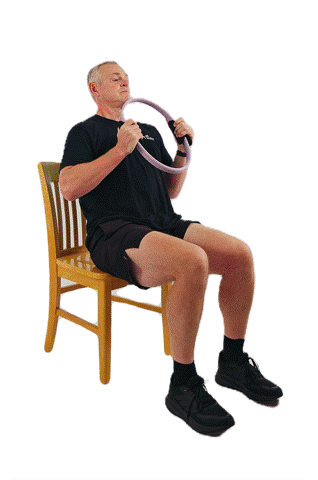

Using Pilates rings in chair-based exercise
In this article, we explore how incorporating Pilates rings into your chair‑based exercise classes can enhance a range of movements and core‑focused exercises. We will begin by outlining the key benefits of using the ring in a seated environment, and then show how to apply those benefits to three simple, effective exercises: the seated torso twist, the seated side bend, and the seated backwards lean.
Why use a Pilates ring?
The Pilates ring acts as a simple external load that helps your muscles switch on more effectively, improves posture, and makes movements more precise during seated exercise. When you sit down, your legs do not contribute much to stability, so your base of support is smaller. This means your lumbopelvic region (your lower back and pelvis), thoracic spine (your mid‑back), and deep core muscles must work harder to keep you upright. Using the ring adds a gentle, controlled squeezing action that helps these areas activate in a more coordinated way.
Pressing inward on the ring creates closed‑chain activation, which simply means your hands are pressing against something solid rather than moving freely. This increases engagement of the pectoralis major (chest muscles), serratus anterior (muscles that help stabilise the shoulder blades), and other scapular stabilisers (muscles that keep the shoulder blades steady). These upper‑body muscles connect to the core through long sheets of connective tissue called fascial slings – one of these is the anterior oblique sling, which links the chest and shoulder to the opposite hip. Because of these connections, pressing the ring also activates deep core muscles like the transversus abdominis, internal obliques, and multifidus, which help keep the spine stable. This improves spinal stiffness and control without needing heavy weights or fast movements.
When you twist or bend sideways, the ring acts as a proprioceptive anchor – meaning it gives your body a clear reference point to help you sense where you are in space. This helps you stay tall, avoid collapsing through the hips or lower back, and move from the thoracic spine, which is the part of the spine designed for rotation and side‑bending. This leads to healthier movement patterns and reduces strain on the lower back.
The ring also allows for graded resistance, meaning you can increase or decrease the challenge simply by changing how firmly you press it. You do not need to make the movement bigger or faster. This is especially helpful for people who need gentle, controlled exercise – such as older adults, those with limited mobility, or anyone rebuilding strength after illness or inactivity.
Overall, the Pilates ring improves seated core exercise by enhancing motor control (how well your muscles coordinate), spinal stability, thoracic mobility, and neuromuscular efficiency (how effectively your nervous system activates your muscles). This makes it a highly effective tool for safe, precise, and progressive seated training.
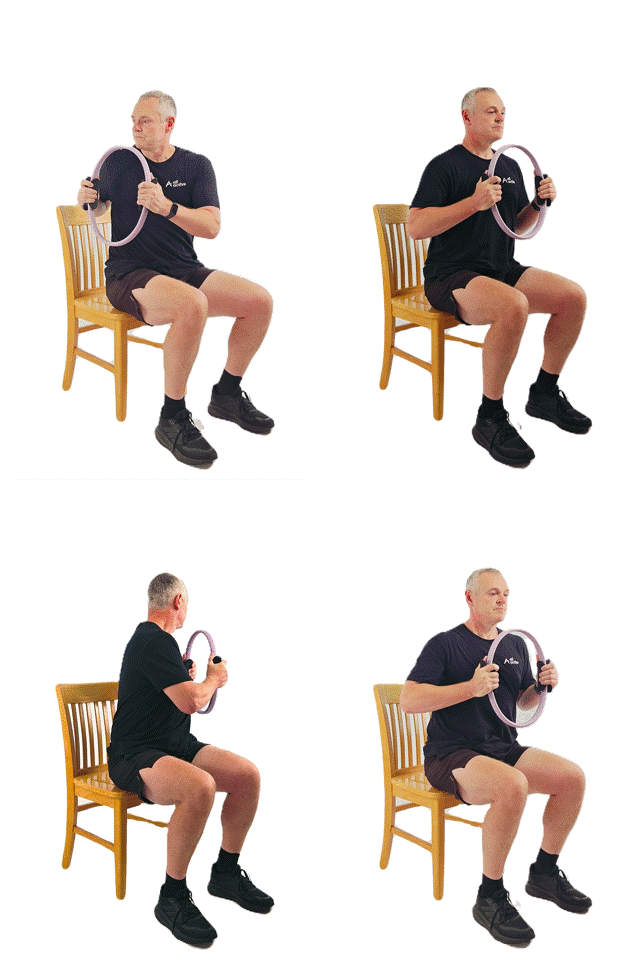
Seated twist
A controlled rotational movement using the ring to create light isometric tension and improve ribcage mobility. The seated twist helps improve thoracic mobility by encouraging movement through the mid‑back while the ring provides gentle, steady resistance. This added tension supports better posture and breathing mechanics, helping participants stay tall and open through the chest. By practising controlled rotation, the exercise also develops the rotational strength and coordination needed for everyday activities such as walking, turning, and maintaining balance.
Instructions
- Sit tall and hold the ring at chest height, elbows soft, shoulders relaxed.
- Apply gentle pressure into the ring to activate the chest and core.
- Rotate your torso side to side, moving from the ribcage rather than the hips.
- Keep hips and knees facing forward – no shifting or rocking.
- Breathe out as you rotate and in as you return to centre.
Progressions
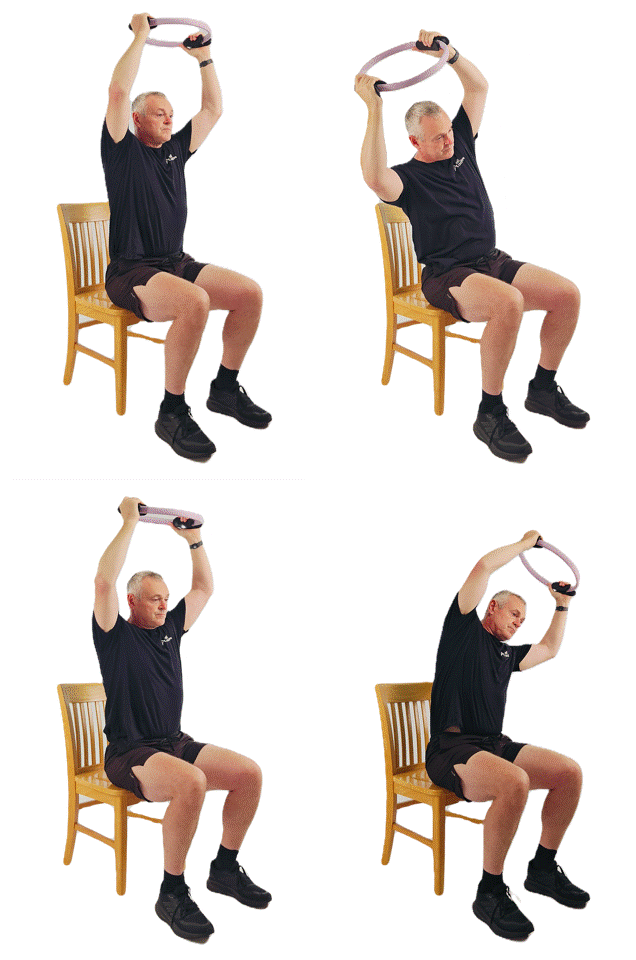
- Add a side bend before rotating.
- Increase ring pressure for greater core engagement.
- Slow the tempo for deeper control.
Resistance bands
Using resistance bands transforms the seated chest press into a true horizontal pressing exercise. When the band is wrapped around the mid back, it pulls the hands backwards, creating resistance directly opposing the forward press. This resistance increases as the band stretches, making the movement progressively harder towards full extension. Bands are portable, inexpensive and easy to adjust by changing thickness, though they can feel easier at the start and significantly harder at the end of the range. They also require correct positioning to ensure even tension. This modality is highly effective for strength development, muscular endurance and shoulder stability.
Dumbbells
Dumbbells introduce external load, but because gravity acts vertically while the arms press horizontally, much of the effort goes into supporting the weights at chest height rather than overcoming resistance in the pressing direction. The anterior deltoids (front of shoulders) work continuously to hold the dumbbells up, while the chest contributes to the forward movement. This creates a blend of static shoulder support, dynamic pressing and increased stabilisation demands. Dumbbells are easy to progress and allow each arm to work independently, though they require access to multiple weights and greater grip strength. Their main training effects include upper body strength, shoulder endurance and movement control.