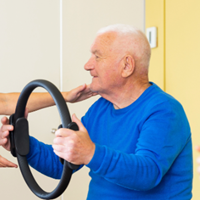
In this article, we explore how incorporating Pilates rings into your chair‑based exercise classes can enhance a range of movements and core‑focused exercises. We will begin by outlining the key benefits of using the ring in a seated environment, and then show how to apply those benefits to three simple, effective exercises: the seated torso twist, the seated side bend, and the seated backwards lean.
Exercise Focus
When performing any exercise, a wide range of equipment can be used to add resistance or increase complexity. However, the same movement pattern performed with different modes of resistance – such as a resistance band compared with a pair of dumbbells – will not necessarily produce the same training effect. Choosing the most appropriate modality therefore depends entirely on the intended outcome for the individuals you are working with. This article explores how one exercise, the seated chest press, can be performed using several types of equipment, and how each option shapes the training effect of this movement pattern.
When I first trained as a sports coach and fitness instructor in the early 1990s, there was a strong emphasis on providing clear and detailed teaching points alongside demonstrations. We were taught to consistently reinforce these points as clients performed the actions. This often involved long, directive lists of instructions, such as: “Back straight, head up, wrists flat, do not lock out elbows, shoulders back…” However, these instructions often felt more like a box-ticking exercise than a genuine effort to help clients.
Why motivation – and social connection – matter Walk into a lively chair-based exercise class and you will notice more than movement. You will hear names being used, laughter shared, stories swapped and small wins celebrated. These moments do more than lift the mood; they nurture the kind of motivation that keeps people coming back. […]
Sensory losses, particularly those affecting vision and hearing, are common among older adults and can have a profound impact on their ability to participate safely and effectively in chair-based exercise classes. As health professionals and exercise instructors, it is essential to recognise how these impairments may influence engagement, safety, and overall experience, and to adapt […]
In a recent news update, I came across a brief article discussing the notion of ‘physical literacy’. This brought to mind Sport England’s initiative in September 2023, during which they unveiled their consensus statement on physical literacy for England. This, in turn, has prompted me to explore physical literacy in this post, and how it […]