When performing any exercise, a wide range of equipment can be used to add resistance or increase complexity. However, the same movement pattern performed with different modes of resistance – such as a resistance band compared with a pair of dumbbells – will not necessarily produce the same training effect. Choosing the most appropriate modality therefore depends entirely on the intended outcome for the individuals you are working with. This article explores how one exercise, the seated chest press, can be performed using several types of equipment, and how each option shapes the training effect of this movement pattern.
The seated chest press
The seated chest press is a highly adaptable upper body exercise that can be performed with a wide range of equipment, from no external load at all to resistance bands, dumbbells, weighted balls, towels and Pilates rings. Although each variation follows the same fundamental pressing pattern, the way resistance is created differs markedly between modalities. These differences influence muscle activation, postural demands, training outcomes and the overall feel of the movement. Understanding how each option behaves allows instructors and participants to select the most appropriate tool for their goals, whether that is strength development, movement practice, chest activation or postural control.
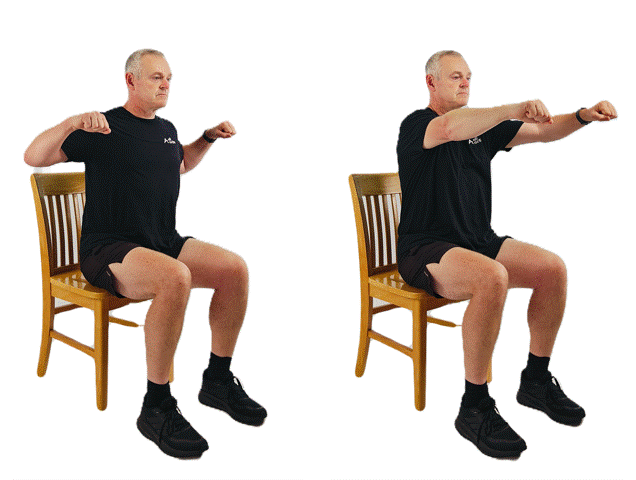
No equipment
The no equipment seated chest press focuses on teaching the pressing pattern and developing active muscular engagement without external load. Sitting tall with relaxed shoulders and controlled movement encourages coordination, posture and awareness of the shoulder blades. Because resistance is created solely by the individual’s own effort, this variation places very little stress on the joints and is ideal for beginners, rehabilitation and anyone learning the movement. Its limitations lie in the minimal resistance available and the difficulty of progressing once the pattern becomes easy, meaning it primarily develops movement practice, muscular endurance and neuromuscular control rather than strength.
Resistance bands
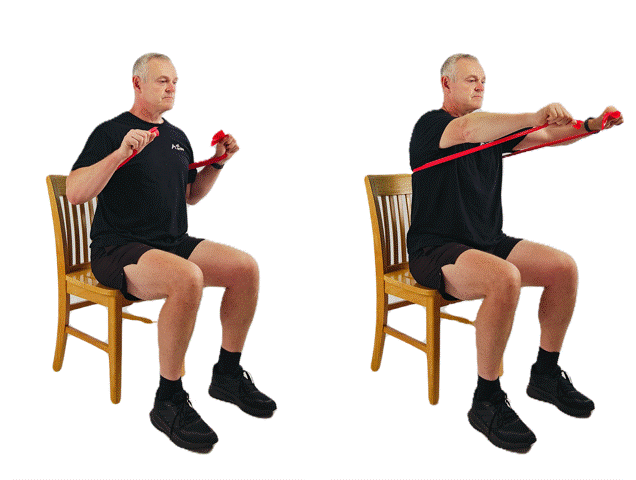
Using resistance bands transforms the seated chest press into a true horizontal pressing exercise. When the band is wrapped around the mid back, it pulls the hands backwards, creating resistance directly opposing the forward press. This resistance increases as the band stretches, making the movement progressively harder towards full extension. Bands are portable, inexpensive and easy to adjust by changing thickness, though they can feel easier at the start and significantly harder at the end of the range. They also require correct positioning to ensure even tension. This modality is highly effective for strength development, muscular endurance and shoulder stability.
Dumbbells
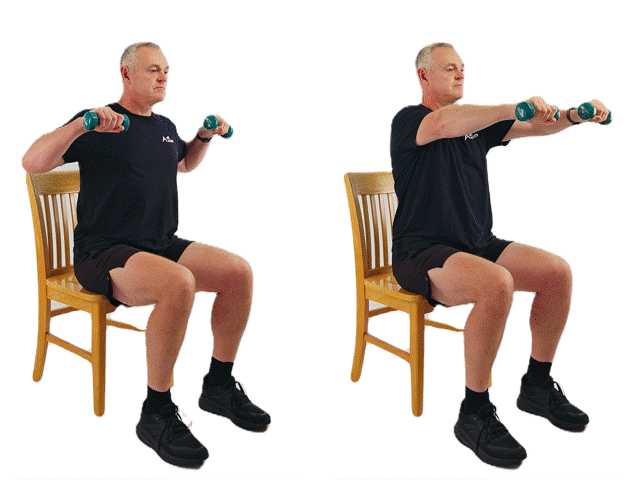
Dumbbells introduce external load, but because gravity acts vertically while the arms press horizontally, much of the effort goes into supporting the weights at chest height rather than overcoming resistance in the pressing direction. The anterior deltoids (front of shoulders) work continuously to hold the dumbbells up, while the chest contributes to the forward movement. This creates a blend of static shoulder support, dynamic pressing and increased stabilisation demands. Dumbbells are easy to progress and allow each arm to work independently, though they require access to multiple weights and greater grip strength. Their main training effects include upper body strength, shoulder endurance and movement control.
Weighted balls
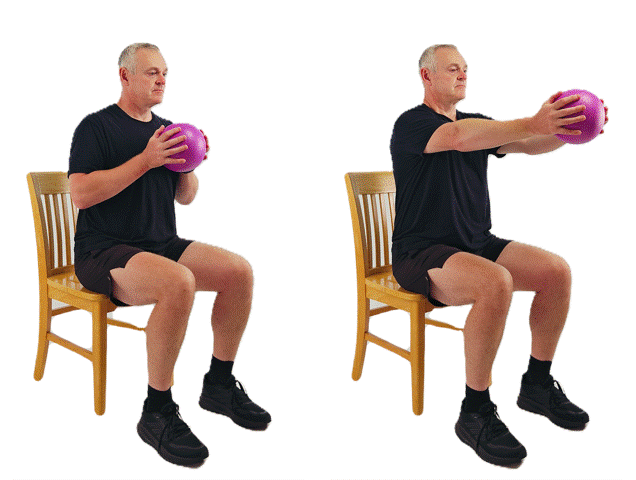
Weighted balls provide a central load held between both hands, encouraging symmetrical movement and reducing the independent arm control required with dumbbells. Because the load is shared, stability demands are lower, and the movement may feel more accessible for individuals with reduced grip strength. Actively squeezing the ball during the press increases chest activation and coordination. However, progression options are limited and weight increments may be larger. Much of the challenge still comes from supporting the load rather than overcoming horizontal resistance. Weighted balls primarily enhance coordination, muscular endurance and chest activation through combined squeezing and pressing.
Towels
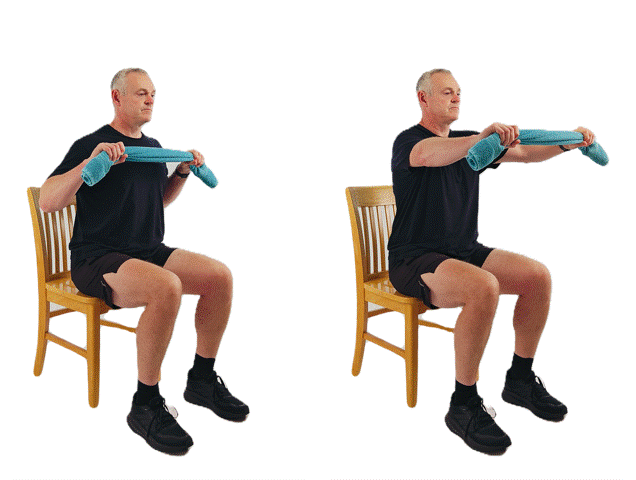
Using a towel during the seated chest press creates resistance through self generated tension rather than external load. By holding the towel slightly wider than shoulder width and actively pulling it apart, the individual produces isometric engagement across the chest and upper back muscles while maintaining an upright posture. This approach is joint friendly and highly adaptable, making it suitable for a wide range of abilities, particularly in rehabilitation or low load settings. However, because the resistance is subjective and difficult to standardise, progression is harder to measure and the overall strength stimulus remains limited. The primary training effects therefore centre on isometric activation, postural control and muscular endurance.
Pilates Rings
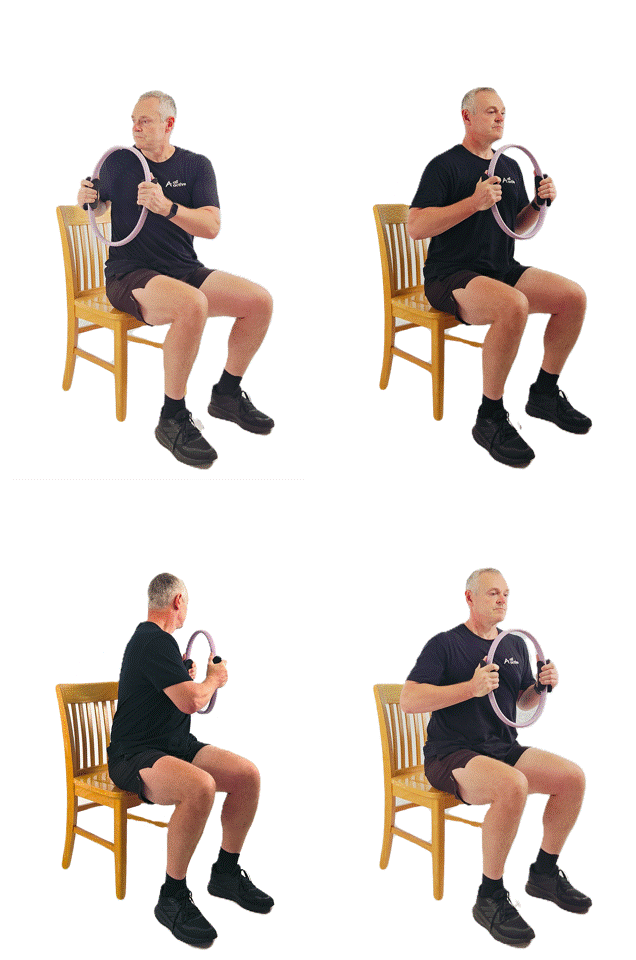
Pilates rings offer a different form of resistance by requiring the user to compress the ring rather than move an external weight. Holding the ring at chest level and squeezing the outer pads encourages strong tactile feedback and promotes effective chest muscle engagement throughout the pressing motion. The lightweight nature of the ring and its low joint stress make it accessible and easy to incorporate into seated exercise sessions. Nonetheless, the resistance available is limited compared with bands or free weights, and progression options are relatively restricted. As a result, Pilates rings are best suited for enhancing chest activation, improving muscular endurance and supporting postural stability rather than developing maximal strength.
Understanding gravity: Bands vs dumbbells and balls
A key distinction between equipment types lies in how they interact with gravity. In a seated chest press, the arms move forwards and backwards in the horizontal plane while gravity acts vertically. Gravity provides little direct resistance to the forward pressing action, meaning the body works mainly to hold the weight up, stabilise the shoulders and control the movement path. Dumbbells and weighted balls therefore challenge the shoulders and trunk to support the load, whereas resistance bands oppose the pressing movement directly. This explains why bands replicate a traditional chest press more closely, while free weights increase postural demand and shoulder stabilisation.
Core engagement across modalities
Core involvement varies significantly depending on the equipment used. Dumbbells create the greatest core challenge because each arm moves independently and the weights are held away from the body, requiring the trunk to resist rotational forces and maintain alignment. Weighted balls also increase core activation by adding load that the trunk must support, though the symmetrical nature of the movement reduces instability. Resistance bands can generate substantial core engagement as the band continually pulls the arms backwards, requiring the abdominals and spinal stabilisers to resist this force. In contrast, towels and Pilates rings create relatively low core demands because resistance is generated through squeezing or pulling rather than external load. Across modalities, the core primarily contributes through isometric stabilisation rather than dynamic movement.
Comparing the modalities
When comparing all modalities, resistance bands offer the most effective stimulus for strength development because they oppose the pressing movement directly. Dumbbells follow closely, providing measurable progression and significant stabilisation demands. Weighted balls offer moderate strength benefits but excel in promoting symmetrical movement and chest activation when squeezed. Pilates rings and towels emphasise isometric tension, muscle awareness and postural stability, making them suitable for endurance and technique work. No equipment versions remain the best choice for rehabilitation and movement practice due to their accessibility and low joint stress. Each modality therefore serves a distinct purpose, and the most appropriate choice depends on whether the goal is strength, endurance, chest activation, postural control or movement quality.
| Modality | How resistance is created | Key benefits | Limitations | Main training effects |
| No equipment | Active muscle contraction only; no external load | Ideal for beginners and rehabilitation; promotes movement quality, posture and coordination | Minimal resistance; difficult to progress; limited strength stimulus | Movement practice; muscular endurance; neuromuscular control |
| Resistance bands | Elastic resistance increases as the band stretches; pulls hands backwards | Provides true horizontal pressing resistance; portable; adjustable tension; challenges stability | Resistance varies through range; requires correct setup; harder at full extension | Strength development; muscular endurance; shoulder stability |
| Dumbbells | Gravity acts vertically; load must be held up while pressing horizontally | Easy to progress; independent arm work; high stabilisation demand | Requires multiple weights; high grip demand; less portable | Upper-body strength; shoulder endurance; movement control |
| Weighted ball | Central load held with both hands; squeezing increases activation | Encourages symmetrical movement; easier for reduced grip strength; improves coordination | Limited progression; larger weight increments; less independent arm control | Coordination; muscular endurance; chest activation (press + squeeze) |
| Towel | Self-generated tension by pulling towel apart | No equipment needed; joint-friendly; promotes chest and upper-back activation | Resistance subjective; difficult to measure progression; limited strength stimulus | Isometric activation; postural control; muscular endurance |
| Pilates ring | Compression of the ring creates resistance | Excellent tactile feedback; promotes chest engagement; lightweight and low joint stress | Limited resistance; fewer progression options; less like traditional pressing | Chest activation; muscular endurance; postural stability |